Home Services Portfolio About Costs Estimate Areas Contact
Get a Free Quote → 0422 490 962
Project · Forest Hill, VIC 3131

Forest Hill — spotted gum deck & jasmine trellis screens
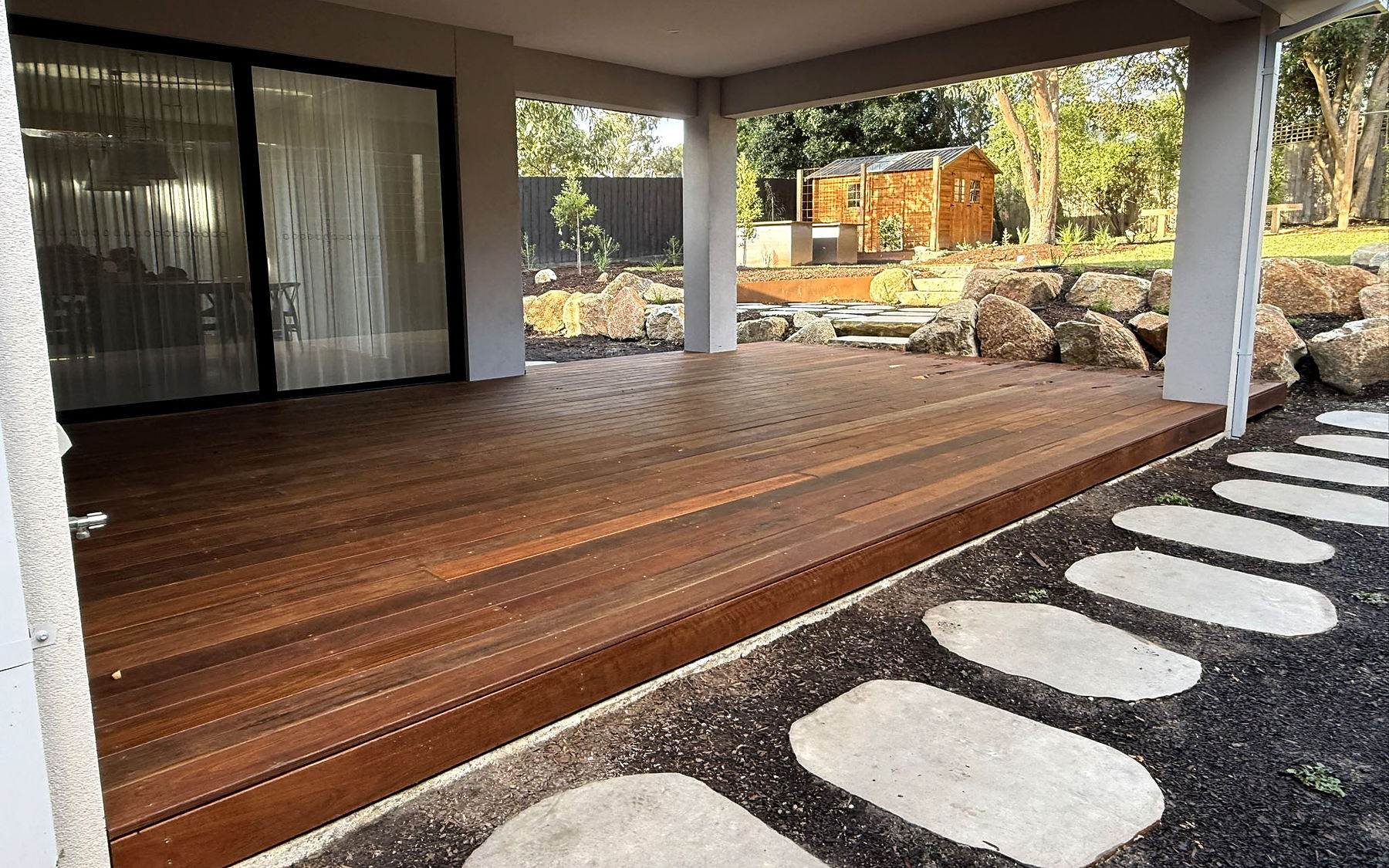
Spotted gum deck under an alfresco in Forest Hill, pre-coated with Cutek sealer, with stepping stones and granite boulders beyond

A spotted gum deck running the length of the alfresco, with every board pre-coated in Cutek penetrating sealer before it went down, and jasmine trellis screens lifting the privacy along the boundary fence. The same approach to both — get the parts nobody sees right, and the finish looks after itself.

5.0 Google & Hipages Rating
250+ Projects
Building, Design & Engineering Qualified
Fully Insured
Location
Forest Hill, VIC 3131
Scope
Hardwood Decking & Boundary Screening
Key Materials
Spotted gum, Cutek penetrating sealer, hardwood & wire trellis
The Deck

Spotted gum, sealed before a single board went down

The deck is spotted gum — a dense Australian hardwood with the hardness and natural durability to take weather and traffic, and a grain that ranges from pale honey through to deep chocolate. Under an alfresco roof like this one, that colour holds beautifully.

Every board was pre-coated with Cutek penetrating sealer before installation. This matters more than it sounds. Once a board is screwed down, its underside and its ends are sealed off from you forever — and end grain is exactly where hardwood pulls in moisture fastest. Coat only the top after the deck is built and you have a board that is protected on one face and bare on the other three, taking up and giving off moisture unevenly. That imbalance is what makes hardwood decks cup, twist and split. Sealing all four faces and the end grain first evens the whole board out. Any ends we cut during installation were re-coated on site before fixing, so no raw end grain is buried in the deck.

Cutek is a penetrating oil, not a film. It works inside the timber by moderating how much moisture the wood takes on, rather than forming a skin on the surface. That is the difference between a deck that weathers back gradually and can be topped up with a clean and a re-coat, and one coated in a film-forming varnish that eventually blisters and peels and has to be sanded back before it can be redone.

The Boundary

Jasmine trellis screens along the fence line

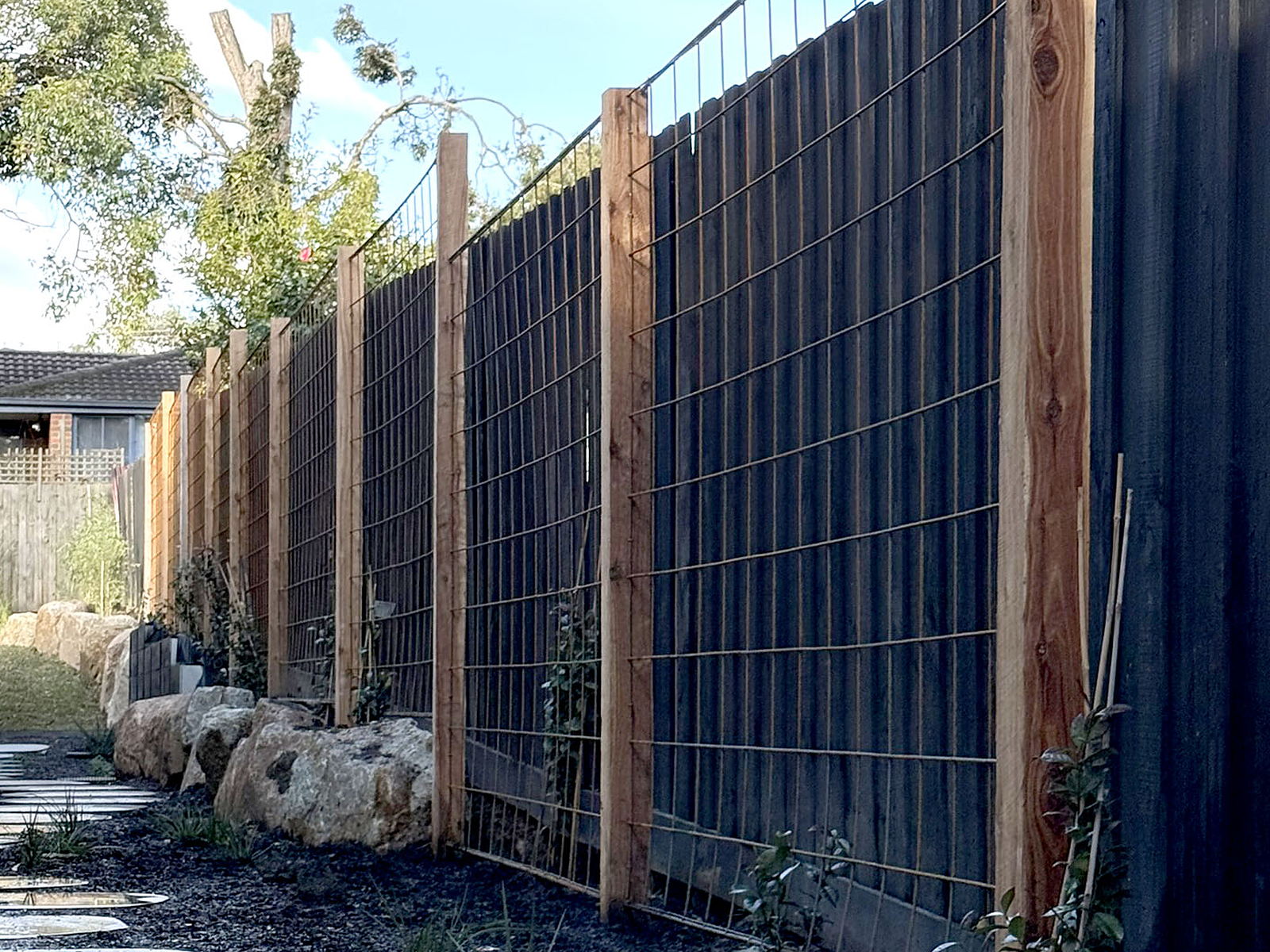
Along the boundary we built trellis screens — hardwood posts with tensioned wire panels standing above the existing fence — and planted jasmine at the base to climb them. It's a way of adding height and privacy on a boundary without building a taller solid fence, which would need a permit in many cases, cost considerably more, and cast far more shade.

The posts and wires are the permanent part, so they're built to outlast the planting: posts set properly, panels squared and tensioned so they don't sag or rack. The jasmine does the rest. Expect real coverage over two to three growing seasons, and the single thing that makes the most difference is training the new growth sideways onto the wires while it's soft, so the plant spreads across the screen instead of racing up one narrow column.
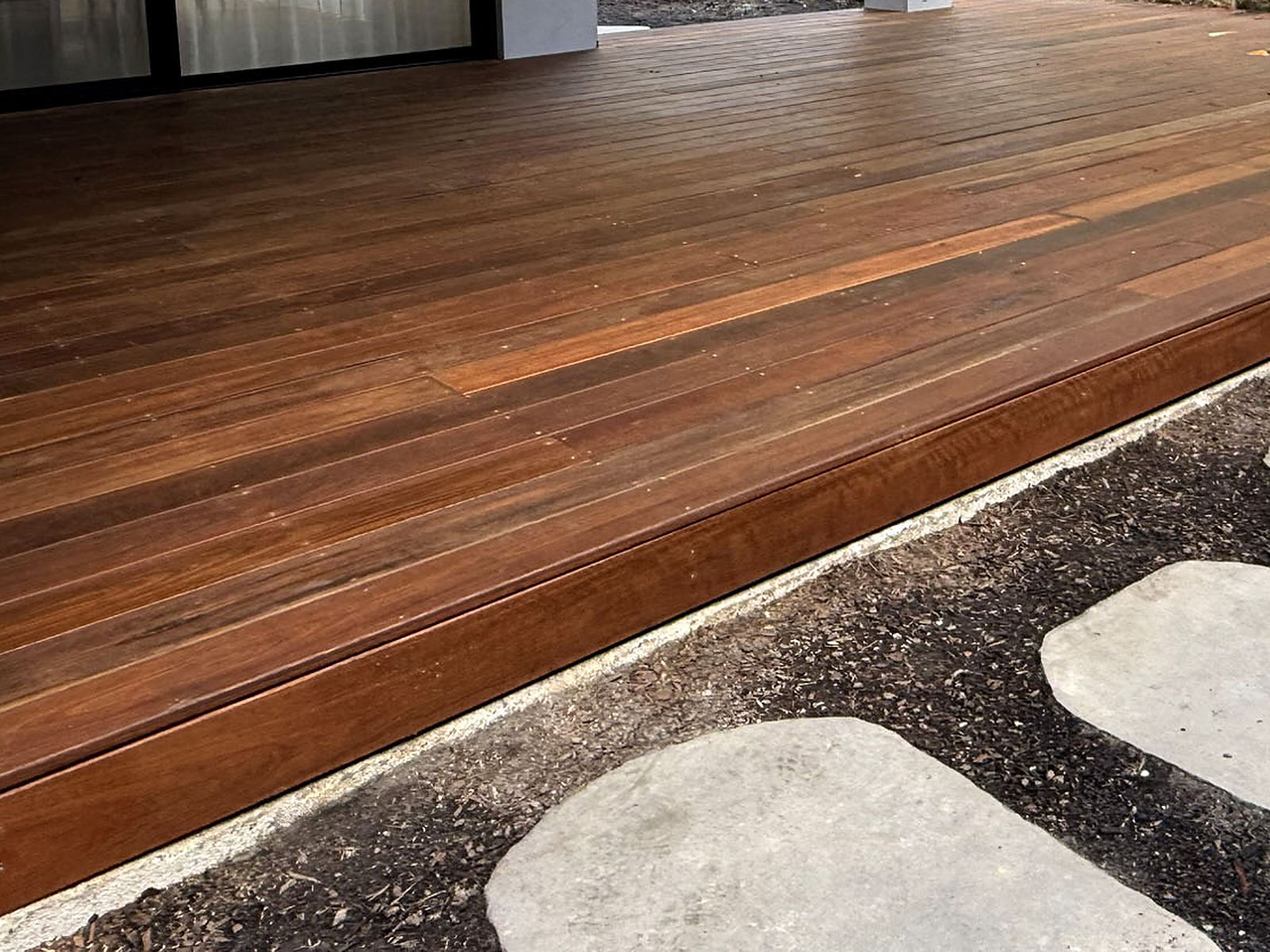
Close-up of spotted gum decking boards and step nosing, showing the colour depth of the Cutek penetrating sealer
Hardwood and wire jasmine trellis screens running along a boundary fence in Forest Hill, with young jasmine planted at the base
Materials & Approach

What went into this build

Spotted gum decking boards, selected for hardness and natural durability
Every board pre-coated with Cutek penetrating sealer on all four faces and end grain before installation
Cut ends re-coated on site before fixing, so no raw end grain is buried in the deck
Hardwood posts and tensioned wire trellis panels above the existing boundary fence
Jasmine planted and tied in to climb the screens
All work carried out by our own team — the people who quote the job build it
FAQ

Decking, stone & screening questions

Why coat decking boards before they are installed?
Because once a board is screwed down you can never treat its underside or its ends again. We pre-coated every spotted gum board with Cutek before it went down, so all four faces and the end grain were sealed. End grain is where hardwood drinks up moisture fastest, and uneven moisture between the top and bottom of a board is what makes decks cup, twist and split. Sealing the whole board first evens that out. Any ends we cut during installation were re-coated on site before fixing.
What is Cutek and how is it different from a decking varnish?
Cutek is a penetrating oil rather than a surface coating. It soaks into the timber and works from the inside by reducing how much moisture the wood takes on and gives off, instead of forming a skin on top. Film-forming products like varnishes and some decking stains look sharp initially but eventually blister, flake and peel, and then have to be sanded or stripped back before recoating. A penetrating oil weathers back gradually and can be topped up with a wash and a re-coat, no sanding.
How often does a spotted gum deck need re-oiling?
As a general guide, every one to two years, depending on exposure. A deck under a roof or alfresco like this one holds its colour much longer than one in full sun and weather. Re-coating is straightforward: clean the surface, let it dry, and apply another coat of oil. If you leave it too long the timber greys off — that is cosmetic rather than structural, but it takes more work to bring the colour back.
How long does jasmine take to cover a trellis screen?
Expect meaningful coverage over two to three growing seasons, and a properly dense green screen after that. It depends on aspect, soil and water. What speeds it up most is training the plant early — tying new growth onto the wires while it is soft so the plant spreads sideways across the screen instead of racing straight up in one narrow column. Watering consistently through the first two summers matters more than fertiliser.
What does a spotted gum deck cost in Melbourne?
It depends much more on what sits under the deck than on the boards themselves. The main drivers are the substructure (height off the ground, whether footings need to be dug and concreted, and whether steel or hardwood framing suits the span), the board width and grade you choose, whether the boards are pre-coated before installation, site access for materials, and details like steps, fascias and picture-framed edges. We measure up and give you a free itemised quote rather than a rate per square metre, because a low-level deck on flat ground and an elevated deck on a slope are very different builds. Our costs guide covers indicative ranges for the rest of a landscape.
Do you build decks and screens in Forest Hill?
Yes. Forest Hill sits in our core service area in Melbourne's east, and we work throughout the surrounding suburbs including Blackburn, Box Hill, Nunawading, Vermont, Mitcham and Burwood East. Decking, fencing, screening, stone work and garden construction are all done by our own team, so the people who quote the job are the people who build it.
Related

More from this property

Services used on this project

Nearby areas we serve

Get Started

Want a deck built like this one?

Free on-site consultation. We'll measure up, talk through timber, coatings and detailing, and give you an honest, itemised quote.

Get a Free Quote →
0422 490 962