Forest Hill — a custom bluestone crazy-paved postbox
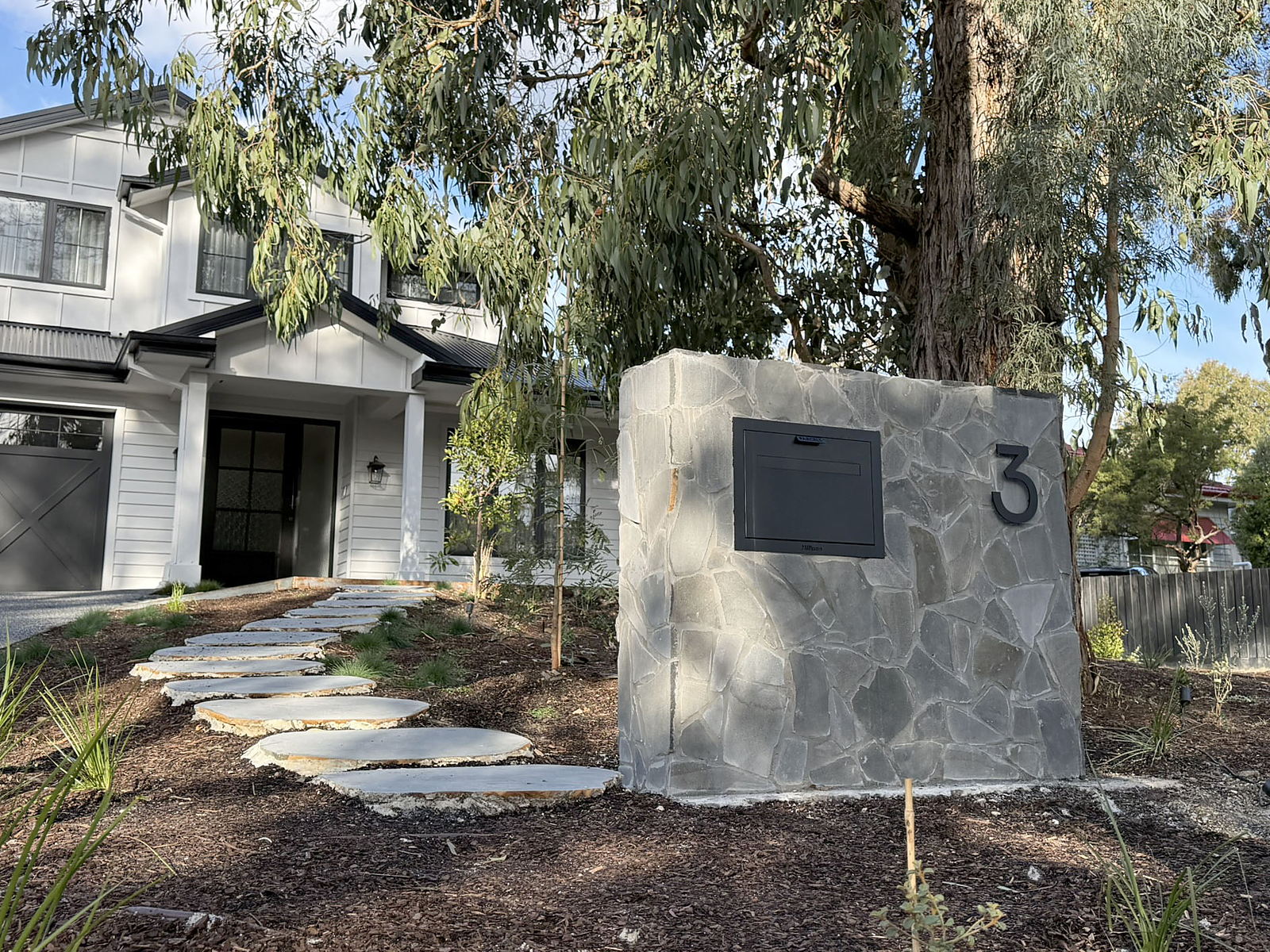
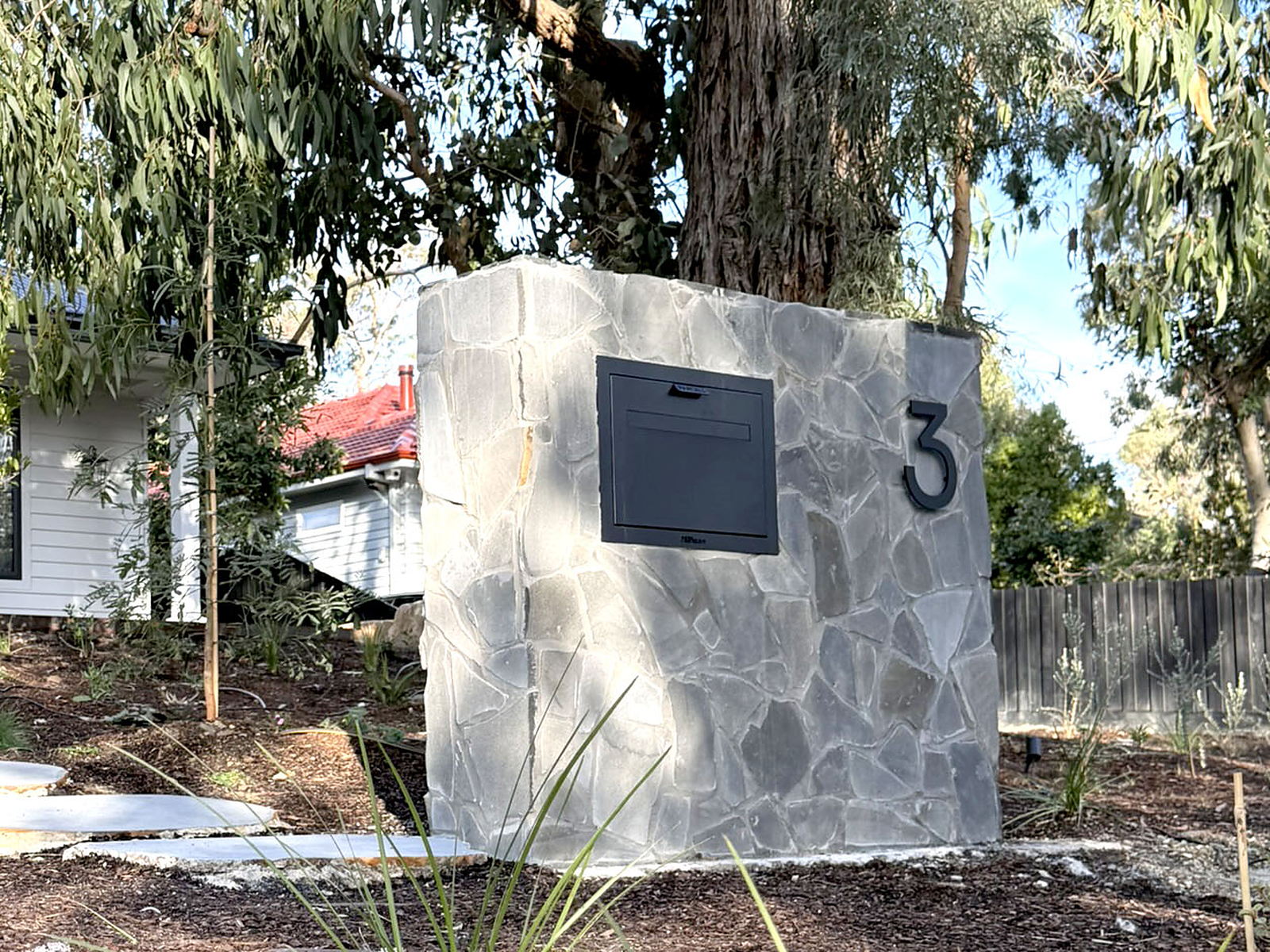
The front of this Forest Hill house needed a postbox with some presence — something that reads as part of the architecture rather than a tin box on a stick. We built a solid custom form and clad it in hand-cut bluestone crazy paving, with a recessed letterbox and the house number set into the face.
Crazy paving is a cutting job, not a laying job
Crazy paving uses irregular pieces of stone fitted together like a jigsaw, rather than uniform pavers laid in courses. That sounds looser and more forgiving than a regular format. It is the opposite. With rectangular pavers the grid does the work for you; with crazy paving every single piece has to be chosen, cut and dressed against the pieces already down, so the joints stay tight and even and the pattern doesn't drift into obvious lines or leave awkward triangular gaps.
Done badly it reads as broken rubble with mortar smeared between it. Done properly the eye reads a continuous stone face and never picks out an individual joint. That is the whole difference, and it is why crazy paving belongs on a feature element like this rather than across a whole driveway — the labour only makes sense where people actually look closely.
We used bluestone, the local stone. Its grey and charcoal range ties the postbox to the roof and the window frames of the house behind it, so the front garden reads as one composition instead of a house with an ornament in front of it.
What a built postbox does for a front garden
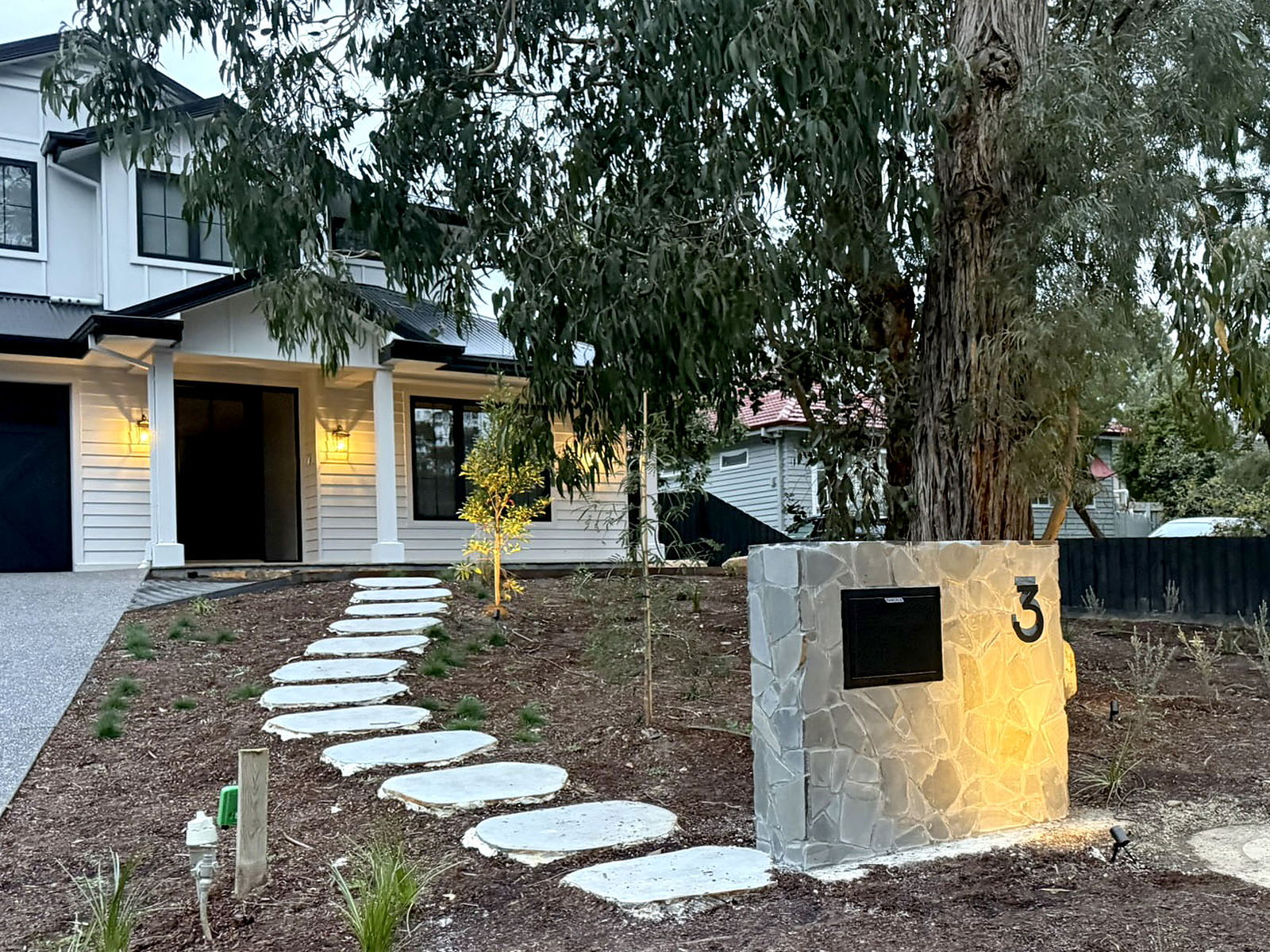
A postbox is the first thing anyone touches on a property and usually the last thing anyone budgets for. Built properly it earns its place: it marks the entry, carries the number so visitors and deliveries find you, and gives the garden a fixed point of mass and material to sit against.
That last part matters more than it sounds on a newly planted garden. Young plants are small, and mulch is mostly empty space for the first couple of seasons. A solid stone element at the front holds a composition together while planting catches up, so a garden looks considered straight away rather than in three years' time.
Bluestone earns its place here for more than the look. It is dense and hard-wearing, so a face at the front of a property takes weather and knocks without going tired or chalky, and it needs no sealing, oiling or repainting to keep doing its job. The colour it has on handover is roughly the colour it will have in ten years.
What went into this build
Stone work questions
More from this property
Services used on this project
Nearby areas we serve
Want stone work like this out the front?
Free on-site consultation. We'll look at the frontage, talk through stone and detailing, and give you an honest, itemised quote.
Get a Free Quote →0422 490 962